






Insights
The Shift Towards Smarter, More Connected Supply Chains
10/04/26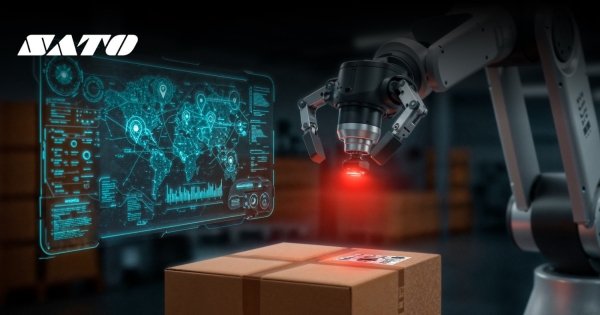
Technology continues to reshape how supply chains operate, offering new ways to improve visibility, reduce manual work and make better decisions. As demand rises and operations become more complex, many organisations are turning to digital tools to keep their supply chains running smoothly.
Artificial intelligence is becoming a core part of daily planning. AI-driven forecasting helps businesses understand demand earlier, reduce excess stock and improve product availability. Predictive dashboards give managers a clearer view of supplier performance and potential delays, allowing issues to be addressed before they affect customers.
AI is also evolving. Generative AI is now being used to analyse large data sets, summarise supplier information and support procurement teams with faster insight. Agentic AI is beginning to automate tasks that once needed human involvement, such as adjusting replenishment settings or rebalancing inventory. As these tools mature, they are shifting supply chains from reactive processes to more proactive, intelligence-led operations. These developments also connect naturally with digital labelling systems, where cloud-based tools can support automated updates or generate formats as part of wider workflows.
Automation is increasing across warehouses and production lines. Robotics, automated sortation and guided transport systems help teams manage repetitive or high-volume work, especially in environments with labour shortages. In manufacturing, automation supports consistent output and can adjust quickly when schedules change.
Digital twins are another growing trend. By creating a virtual model of a supply chain, organisations can test scenarios, anticipate disruptions and refine inventory or transport plans. When these models are connected to real-time data from sensors or RFID events, they become powerful planning tools that help reduce cost and improve responsiveness.
IoT is also strengthening visibility. Sensors placed on assets, containers or equipment provide live updates on temperature, movement and other conditions. This is important for sectors such as food, healthcare and electronics, where handling data must be accurate and immediate. IoT information also feeds digital twin models, helping supply chain teams understand how their network behaves in different situations.
As connectivity increases, cybersecurity is becoming a priority. With more devices capturing and exchanging information, businesses are focusing on secure systems that protect sensitive data. In the labelling environment, this includes secure RFID encoding, controlled cloud access and trusted remote-maintenance platforms that help resolve issues without exposing systems to unnecessary risk.
Labelling and identification technologies are evolving in parallel with these trends. Cloud-managed labelling and smart tagging support smoother information flow from production through to distribution. RFID and 2D barcodes help improve stock accuracy, support faster picking and provide clearer traceability, which is essential for compliance and quality control.
SATO supports this shift with technologies designed for connected, high-performing operations. Cloud tools such as SATO AEP Cloud allow organisations to keep label data consistent across locations, which is particularly valuable when adapting to new workflows or meeting global requirements. For higher-volume environments, print engines and industrial units like the CL6NX Plus provide reliable label production for automated print-and-apply systems. In fast-moving warehouses, mobile printers such as the PW4NX enable operators to print labels at the point of activity, reducing unnecessary travel and improving productivity. Compact touchscreen solutions like the FX3-LX also support flexible day-to-day labelling tasks without the need for PCs or complex set-up.
The shift towards smarter, more connected supply chains is ultimately about resilience. By combining automation, AI, IoT and advanced labelling, organisations can act faster, reduce errors and maintain clearer visibility across their networks. As these technologies mature, supply chains are becoming more adaptable, more accurate and better equipped for future challenges.
Latest News
All News

10/02/26
SATO Europe appoints Armelle Jaclot as European Marketing Director
10 February 2026 – Heidelberg, Germany – SATO Europe...

Connect with us


